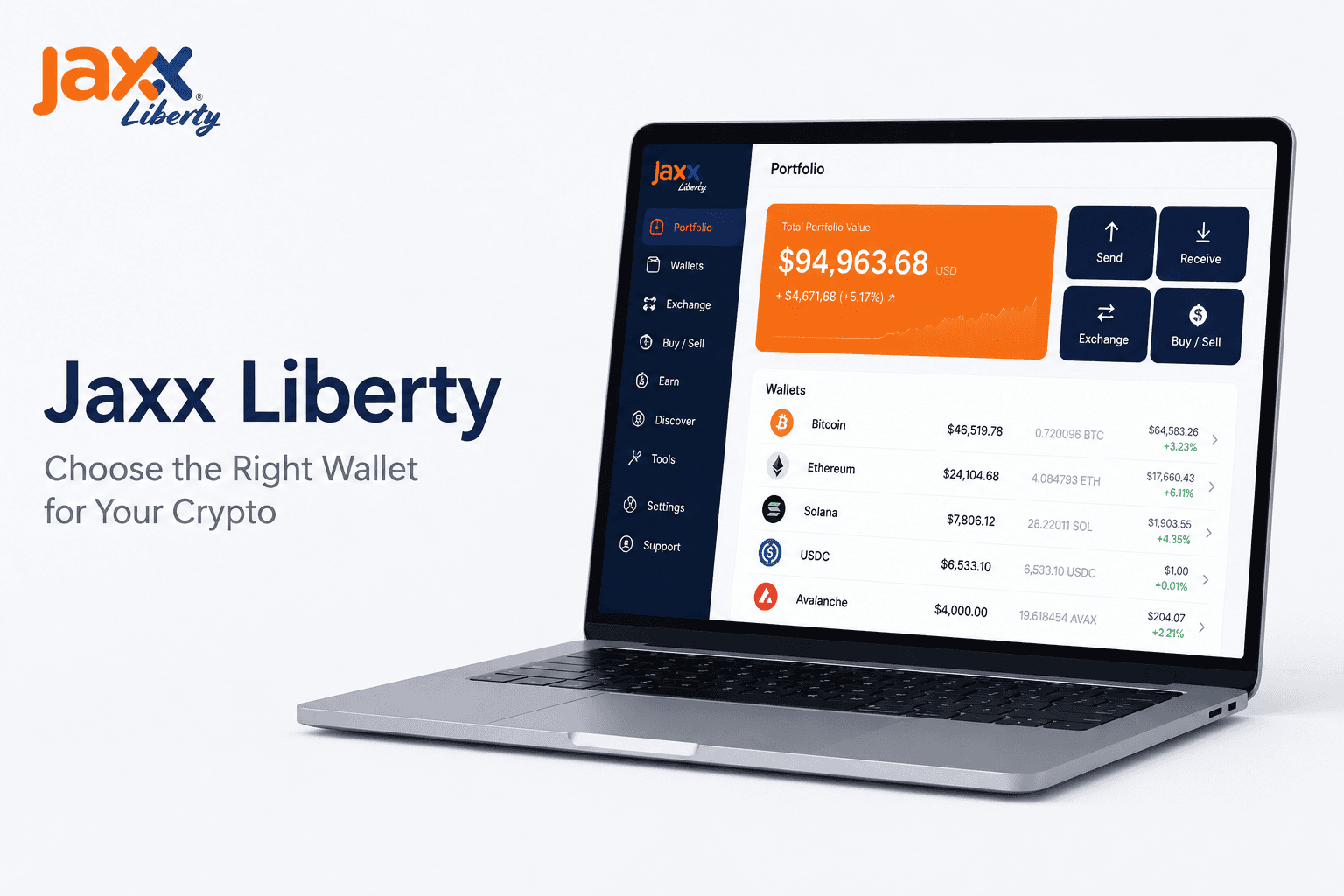
A Jaxx Liberty alternative must prioritize local private key ownership and multi-chain versatility to ensure you maintain total control over your digital assets. Modern self-custodial wallets now integrate biometric security and cross-platform syncing to simplify portfolio management. Choosing the right interface involves balancing 70+ network supports with a transparent, seed-based backup flow that eliminates centralized risks.
How the 2026 wallet market changed comparison standards
By 2026, the self-custody wallet market has been completely redrawn — and the gap between wallets that keep pace and wallets that fall behind has never been more visible. USA users are no longer asking «does it support Bitcoin?» That question is settled. The real benchmarks now revolve around multi-chain interoperability, layered security architecture, and frictionless cross-platform access. A true multi asset crypto wallet in 2026 is expected to handle Bitcoin, Ethereum Layer 2 networks, Solana, and dozens of other blockchains from one unified interface — no tab-switching, no separate apps, no compromises. That shift in expectation has fundamentally changed how any serious wallet, Jaxx Liberty included, positions itself in an increasingly crowded field.
Security has moved far beyond writing down twelve words on a piece of paper. As Token Metrics confirms, 2026 wallet evaluations are now shaped by biometric authentication, multi-signature authorization, MPC-based seedless recovery through 2-of-3 threshold signature schemes, and AI-powered fraud detection that flags malicious contracts before you ever hit «approve.» Human-readable transaction simulation has become a genuine safety layer — plain-language previews of exactly what a smart contract will do before you commit. These are not luxury features for institutional desks anymore. They are the baseline that any informed user expects when choosing a wallet for multiple blockchains. Full stop.
The comparison conversation has also broadened to cover everyday financial workflows. Hybrid hot/cold storage models, embedded fiat on-ramps, Wallet-as-a-Service infrastructure, native DeFi integration — all of these are now standard talking points when USA users weigh their options. A cross platform crypto wallet that runs consistently across desktop and mobile — without demanding credential re-entry or forcing you to juggle separate instances — holds a real, tangible usability edge. Jaxx Liberty was engineered around exactly this kind of cross-device consistency: private keys stored locally on your device, access controlled entirely by your seed phrase, zero centralized account system in the middle. That architecture speaks directly to what 2026 demands — user-controlled custody with no intermediary touching your keys.
Wallet comparison in 2026 is a multi-dimensional exercise. Interface clarity, supported asset breadth, backup flow design, security depth — every dimension matters, and no single metric tells the whole story. For users who prioritize transparent, non-custodial design with broad asset support and reliable cross-platform reach, mapping how each wallet handles these dimensions is the only practical starting point. Jaxx Liberty’s approach — local key storage, no email-based account recovery, multi-cryptocurrency support across platforms — reflects a design philosophy built for one type of user specifically: someone who wants direct, unmediated control over their own funds. No third party. No middleman. Just you and your keys.
Feature comparison points for wallets similar to Jaxx Liberty
When choosing a non-custodial wallet, you must evaluate how the architecture handles your private keys and daily transaction needs. We have designed Jaxx Liberty to balance high-level security with a unified interface, ensuring you maintain full control over your digital assets across all your devices.
| Evaluation Criteria | Jaxx Liberty Standard | Industry Benchmark |
|---|---|---|
| Supported Assets | 80+ Cryptocurrencies | Varies (typically 50–100+) |
| Security Model | Non-custodial / Local Keys | Non-custodial (Standard) |
| Backup Method | 12-word BIP39 Seed Phrase | 12 to 24-word Seed Phrases |
| Platform Access | iOS, Android, Desktop | Mobile-only or Cross-platform |
| Portfolio Tools | Unified Dashboard & News | Basic balance display |
| In-App Swaps | Integrated Exchange Access | Native DEX or 3rd-party API |
Why interface clarity matters more than feature count
A clean crypto wallet interface isn’t a cosmetic perk — it’s your last defense against an irreversible mistake. Every send, every swap, every approval: the layout either helps you catch the error before it happens or quietly buries it. Jaxx Liberty builds around one core conviction — clarity at the moment of action is the only thing standing between you and a wrong transaction you can never undo. No support team. No reversal button. Just you, your keys, and what you can see on the screen.
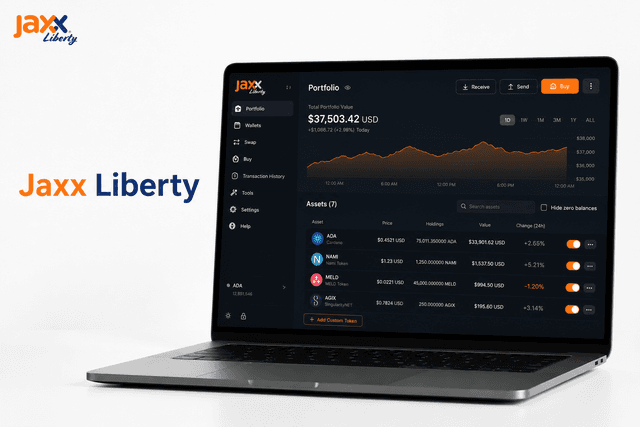
The dashboard puts everything that actually matters — balances, asset list, recent activity — right in front of you, no menu archaeology required. When you initiate a send, the recipient address, the amount, and the network fee land on a single confirmation screen before a single byte hits the blockchain. One screen. Everything visible. That forced review moment is not an accident of design — it’s the whole point. It eliminates an entire class of mistakes that cluttered, fragmented interfaces produce constantly: wrong amounts, wrong networks, fees you never agreed to.
Navigation clarity matters even more when you’re doing something unfamiliar. Swapping assets, juggling Bitcoin alongside Ethereum, Litecoin, and a dozen other supported coins — these actions carry real stakes. Jaxx Liberty keeps every flow strictly linear: one step leads to the next, no ambiguous buttons stacked on top of each other, no overlapping panels screaming for attention. For users newer to self-custody, this is not a minor convenience. A confusing approval screen produces one of two outcomes: the user abandons the action entirely, or — far worse — confirms something they never intended to confirm. For step-by-step guidance on specific features, the Jaxx Liberty wallet support resource walks through common workflows in plain language.
Feature count without usability is just noise. A wallet stuffed with functions that buries confirmation details, obscures network selection, or wraps approval prompts in dense technical jargon creates genuine financial exposure for real people. Jaxx Liberty’s design logic is ruthlessly practical: optimize the actions users take every single day — sending, receiving, checking balances, swapping — and make each one as transparent as glass. Your private keys live locally on your device. No centralized recovery exists anywhere. That means the interface has to earn trust through relentless clarity, not through the illusion of complexity. That’s the standard. Full stop.
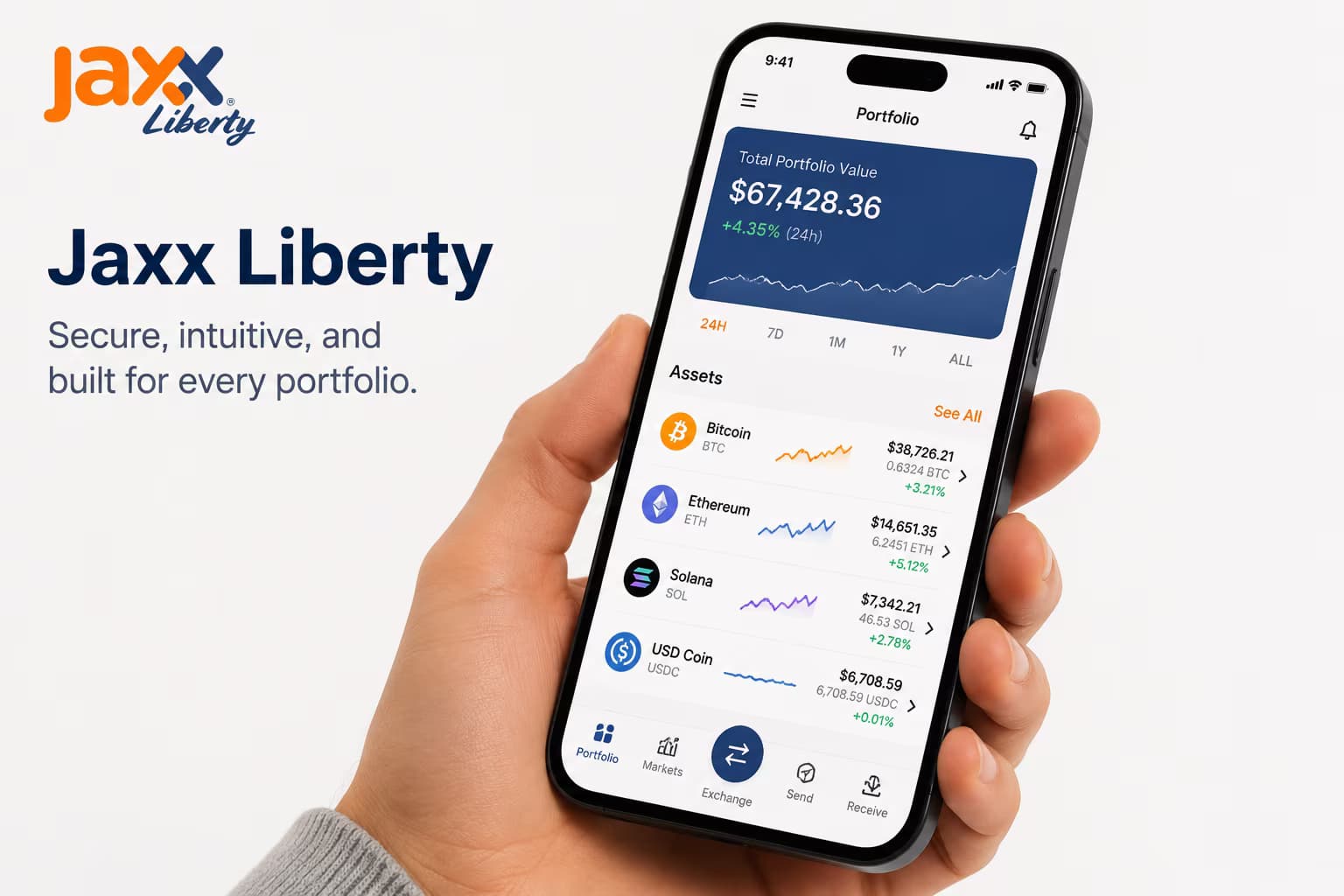
Backup flow: seed phrase control versus newer recovery models
Your backup method is your wallet — and Jaxx Liberty builds everything around direct seed phrase ownership, the most transparent form of self-custody that actually puts you in charge. The moment you set up Jaxx Liberty Wallet, a 12-word recovery phrase generates locally on your device and goes nowhere else. No server receives it. No account holds it. That phrase controls every private key across every supported asset — Bitcoin, Ethereum, Litecoin, and beyond — from a single point of access. Nothing stands between you and your funds.
Newer recovery models tell a different story. Social recovery, cloud-based key sharding, biometric-linked accounts — they all promise less friction at setup. And sure, you won’t lose a piece of paper. But you will depend on a service provider staying operational, a trusted contact responding when it counts, or a cloud account that never gets compromised. That’s a lot of faith to place in systems you cannot inspect. For users who want backup logic they can fully understand and verify, those models introduce exactly the kind of opacity that makes auditing impossible. With Jaxx Liberty, the logic is brutally simple: write down your 12 words, store them offline, keep full access no matter what any external system does or doesn’t do.
Seed phrase ownership means responsibility lands entirely on you. No password reset exists. No recovery email. No support team can unlock access if your phrase disappears. That’s not a gap in the product — it’s the whole point. A non-custodial wallet that could override your access wouldn’t be non-custodial at all. If you want to verify the exact backup steps for your platform or need product-specific guidance, Jaxx Liberty official support has accurate answers. Learn the backup flow before you ever need it. That single step separates prepared users from everyone else.
Choosing a seed phrase wallet means signing a clear contract: total control in exchange for total responsibility. Jaxx Liberty makes that contract as frictionless as possible. The backup prompt surfaces during initial setup, the phrase displays once with explicit instructions to record it, and restoring access on any supported device — desktop or mobile — requires only those 12 words. No proprietary recovery tool. No account verification. No waiting. That directness is precisely what makes wallet backup and restore in Jaxx Liberty predictable across every platform and reliable under every circumstance, including device loss, hardware failure, or anything else that catches you off guard.
Managing a diverse portfolio requires a wallet that supports Bitcoin, altcoins, and various tokens within a single, secure interface. Jaxx Liberty provides the multi-asset infrastructure you need to maintain full control over your digital assets through local private key storage.
Security risks users compare before switching wallets
In 2026, wallet selection comes down to one brutal question: does this thing actually protect your funds, or does it just look like it does? The threats draining real wallets today have nothing to do with protocol bugs or blockchain exploits. They are entirely human-layer failures. A seed phrase scrawled on a sticky note, then lost, burned, or found by the wrong hands. A malicious smart contract approval clicked through MetaMask that quietly empties an Ethereum wallet over the next 48 hours. An address poisoning attack where one character flips at the exact moment you hit send. These are the scenarios serious users run through their heads before committing a single satoshi to any non-custodial wallet.
As CryptoWisser lays out in their 2026 custody guide, seed phrase mishandling and malicious contract approvals top the list of confirmed self-custody failure modes this year. Not theoretical. Confirmed. The practical response from people who have actually lost funds — or narrowly avoided it — follows a clear pattern: multisig through Safe for anything high-value, hardware kept fully offline, mandatory test transactions before moving serious amounts, regular DApp permission audits to kill persistent contract access, and hard address verification before every single send. Any wallet that buries the permission layer or skips address confirmation steps is not a security tool. It is a liability with a nice logo.
Jaxx Liberty Wallet runs on a single foundational principle: your private keys live on your device, not on anyone else’s server. No centralized account. No email recovery. No third-party custody. Full stop. The security model starts with you and ends with you — which means your funds cannot be frozen, seized, or touched by any external party, including us. There is no password reset path because there is not supposed to be one. That is architecture, not an oversight. For users who have already decided that control is non-negotiable, that structure is the baseline. For the practical steps — backup procedures, permission management, safe usage across platforms — the Jaxx Liberty wallet support resource covers exactly what reduces exposure to the most common self-custody threats.
The real comparison users are making right now goes well beyond asset support lists or device compatibility — though Jaxx Liberty covers Bitcoin, Ethereum, Litecoin, and a wide range of additional cryptocurrencies across both desktop and mobile. The actual question is which wallet gives you enough transparency and control to manage risk yourself. Can you see what you are signing before you sign it? Can you verify the address before the transaction goes out? Do you understand that your backup strategy — not the wallet brand, not the UI — is what stands between your funds and permanent loss? We build the tool. You hold the keys. That division of responsibility is what self-custody means in practice, not in a whitepaper.
How to choose a wallet like Jaxx Liberty for everyday use
Selecting a reliable crypto wallet option for daily management requires a focus on security, asset diversity, and user autonomy. In 2026, the responsibility for protecting digital wealth rests entirely on you, making the choice of architecture critical for long-term confidence.
- Prioritize non-custodial architecture. Ensure the wallet gives you exclusive control over your private keys. In Jaxx Liberty, we store your keys locally on your device, meaning no third party—including us—can access your funds or freeze your account.
- Verify multi-asset support. Choose a wallet that handles Bitcoin, Ethereum, and other major assets within a single interface. This simplifies daily portfolio tracking and reduces the need to manage multiple recovery phrases for different apps.
- Evaluate the backup and recovery system. Confirm the wallet uses a standard 12-word seed phrase. Since there is no «forgot password» button or centralized recovery in a true self-custody environment, your ability to manage this phrase is the only way to maintain access to your assets.
- Check cross-platform availability. For effective daily use, you need a wallet that syncs across mobile and desktop. You can follow our Jaxx Liberty setup guide to see how browser-based management integrates with your primary wallet.
- Assess the user interface for clarity. A wallet app for daily management should provide clear transaction histories, real-time price data, and easy-to-read portfolio breakdowns. Complexity in the UI often leads to user errors during high-stakes transfers.
- Confirm the developer’s reputation. Look for products developed by established teams with a history of transparency. Jaxx Liberty, created by Decentral and led by Anthony Di Iorio, is built on years of industry experience in providing secure, user-centric tools.
Cost factors to compare in a self-custody wallet
Understanding the cost structure of a self-custody wallet is essential for managing your digital assets efficiently. While Jaxx Liberty does not charge fees for receiving or holding your crypto, external costs such as network gas and third-party service fees apply depending on your actions. Use the table below to compare typical cost factors you will encounter when managing your portfolio.
| Action Type | Estimated Fee Range | Cost Driver |
|---|---|---|
| Network Transfers (L1) | Variable (Gas) | Blockchain congestion and network demand. |
| Layer 2 Transfers | 90%+ Reduction | Efficiency of L2 scaling solutions vs Ethereum L1. |
| In-App Swaps | 0.1% – 1.0% | DEX liquidity provider fees and partner spreads. |
| Card Purchases (Fiat) | 2.0% – 5.0% | Payment processor and banking risk premiums. |
| ACH Transfers | 0.0% – 1.0% | Standard bank processing for fiat on-ramps. |
US regulation that affects wallet users without changing self-custody basics
US crypto regulations in 2026 are rewriting the rules for on-ramps, stablecoins, and exchanges — and none of that touches what a non-custodial wallet actually does with your keys. Your private keys live on your device. Full stop. If you run Jaxx Liberty, that architecture has not changed, will not change, and no federal framework has jurisdiction over it. What regulators are reshaping is everything around the wallet — the fiat gateways, the custodial platforms, the compliance machinery that third parties must now operate inside.
Stablecoin legislation crossed the finish line. The Federal Register confirms the GENIUS Act framework now imposes issuer-level obligations on stablecoin providers — reserve backing, federal licensing, ongoing reporting. For a wallet user, the practical effect is narrow: the stablecoins you hold may originate from issuers operating under heavier oversight, but those tokens still arrive at your wallet address, and you still control them entirely. Jaxx Liberty holds no funds on your behalf, acts as no custodian, and carries none of the issuer-level exposure that applies to stablecoin minters or centralized exchanges. That distinction matters enormously right now.
KYC at fiat on-ramps has tightened hard. Exchanges and payment processors converting dollars into crypto must now collect identity documentation, run transaction monitoring, and flag large transfers to financial regulators. That friction hits the entry point into crypto. Once assets leave a compliant exchange and land in a self-custody wallet like Jaxx Liberty, they move under your direct control — no account system, no email login, no centralized recovery path. The seed phrase you generate during setup is the only credential that counts. It never touches a server. Nobody else has it.
IRS pressure on custodial brokers is expanding too, with new cost-basis tracking and transaction reporting requirements hitting centralized platforms. Self-custody wallets sit outside that scope entirely. Managing Bitcoin, Ethereum, Litecoin, and other supported assets through Jaxx Liberty means you carry the record-keeping responsibility yourself — the wallet gives you clear visibility across your holdings, but the tax reporting obligation belongs to you. Knowing exactly where regulation applies and where it stops cold is the most practical edge any US crypto user can have heading into the rest of 2026.
Expert takeaway on where wallet competition is heading
Wallet competition has moved past coin counts and clean UI — the real fight now is who gives you genuine self-custody and a full portfolio dashboard without ever touching your keys. That baseline of «supports many coins, looks decent» is table stakes. Dead minimum. What actually separates wallets in 2026 is whether they hand you real private key control while simultaneously delivering live market data, multi-asset visibility, and seamless cross-device access — all without routing your credentials through someone else’s server.
Analysts at State Street have flagged exactly this shift: the custody landscape is gravitating toward hybrid models where users demand both institutional-grade security thinking and the flexibility of software-based access. That maps precisely onto what Jaxx Liberty was built to do. Private keys stay on your device. A 12-word seed phrase is your sole recovery mechanism — full stop. Bitcoin, Ethereum, Litecoin, and dozens of other assets, managed from one interface across desktop and mobile. Device sync runs through your seed phrase, not a cloud account. No third party ever holds the keys. Ever.
Competitive pressure is also forcing wallets to bake market data into the core experience rather than making users juggle three apps to check a price. When live price movements, portfolio balance, and asset allocation live in the same place where you send and receive — you make faster, sharper decisions. That is not cosmetic. It fundamentally changes how actively people manage their holdings. Jaxx Liberty was architected around this from day one, treating market awareness as part of the custody experience itself, not a feature bolted on later.
Practically, what this means is brutal in its simplicity. The wallets gaining ground treat users like capable adults. No password reset. No account recovery without the seed phrase. Full responsibility on your side — full control as the payoff. That model demands honest UX and zero hand-waving about risk. It is the only architecture that keeps self-custody meaningful. Think about it: if a wallet can recover your funds without your seed phrase, someone else controls your funds. The market is finally waking up to that distinction, and it is reshaping product decisions across the entire space.
Conclusion
The features that actually separate a great Jaxx Liberty alternative from a mediocre one come down to three hard requirements: private key ownership, cross-platform access, and usability that doesn’t collapse under real-world pressure. Get all three right, and you have a wallet that works for you. Miss even one, and you’re building on a foundation that will eventually crack.
Self-custody is not a feature. It’s a philosophy baked into the architecture. Your seed phrase is the only credential that matters — full stop. No recovery email. No support ticket. No centralized server quietly holding a copy of your keys «just in case.» That last part is the trap. A wallet that stores keys server-side, even partially, is not self-custody — it’s a custodial product wearing a different label. Jaxx Liberty gets this right: keys live on your device, access flows entirely from your recovery phrase, and there is no third party in that chain. When you evaluate any alternative, that’s the first question you ask, and the answer has to be unambiguous.
Cross-platform access is where theory meets daily life. You’re checking a balance on your phone between meetings. Later that night, you’re managing a larger transaction from a desktop. A wallet that runs natively on iOS, Android, and desktop — with full feature parity across all three — means you never have to choose between convenience and capability. Jaxx Liberty supports exactly this kind of workflow. So when you’re comparing alternatives, don’t just ask whether a desktop version exists. Ask whether it’s a full client or a stripped-down companion app that forces you back to mobile the moment things get complex. That distinction matters enormously when you’re tracking multiple assets or digging through transaction history at 11pm.
Multi-asset support and a clean backup flow round out the picture. The strongest self-custody wallet for everyday use covers Bitcoin, Ethereum, and a wide range of additional assets under one seed phrase — no juggling five different apps, no five different backup processes. But the backup flow itself deserves as much scrutiny as the asset list. Complexity at the seed phrase creation and verification stage is where real money gets lost. Permanently. The best wallets walk you through that moment with clarity and zero ambiguity, because that single interaction — writing down those words, confirming you have them right — is the most consequential thing you will ever do with your wallet.
Frequently Asked Questions
What makes Jaxx Liberty a strong choice as a multi-asset crypto wallet in 2026?
Jaxx Liberty supports 80+ cryptocurrencies across iOS, Android, and desktop from a single unified interface, with private keys stored locally on your device and no centralized account system. Its 12-word BIP39 seed phrase backup, integrated exchange access, and unified portfolio dashboard make it competitive against the 2026 industry benchmark for multi-chain wallets.
How does Jaxx Liberty’s backup and recovery system work?
During setup, Jaxx Liberty generates a 12-word recovery phrase locally on your device — it is never transmitted to any server. This single phrase controls access to all supported assets across every platform, and restoring your wallet on any new device requires only those 12 words, with no proprietary tool or account verification needed.
Does US crypto regulation in 2026 affect how Jaxx Liberty handles my private keys?
No. Regulatory frameworks like the GENIUS Act and expanded IRS reporting requirements target custodial brokers, stablecoin issuers, and fiat on-ramp providers — not non-custodial software wallets. Jaxx Liberty holds no funds on your behalf, so your private keys remain entirely under your control and outside the scope of those mandates.
What fees should I expect when using a self-custody wallet like Jaxx Liberty?
Jaxx Liberty charges no fees for holding or receiving crypto. Users pay underlying blockchain network gas fees for transfers, which vary by congestion, while Layer 2 transactions cost 90%+ less than Ethereum mainnet. In-app swaps typically run 0.1% to 1.0%, and fiat card purchases through third-party on-ramps range from 2% to 5%.
What are the most critical security practices for self-custody wallet users in 2026?
The top confirmed failure modes are seed phrase mishandling and accidental malicious contract approvals. Best practices include storing your recovery phrase offline only, running test transactions before moving large amounts, auditing DApp permissions regularly, and verifying recipient addresses character-by-character before every send. Jaxx Liberty’s local key storage ensures no third party can access or freeze your funds.
 Jaxx Wallet Extension: Fast Browser Crypto Management
 How to Find a Trusted Jaxx Liberty Contact Option
 Cardano Jaxx Wallet: Manage ADA in Your Portfolio